
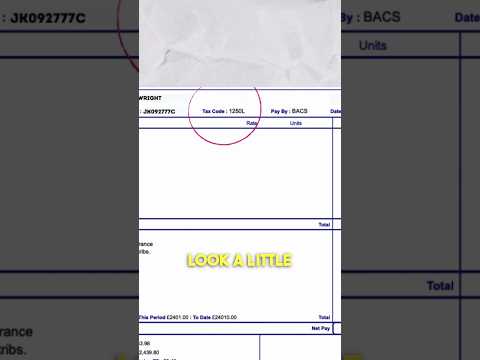
You know that feeling when you open your tax forms and it looks like a foreign language, right? Like, seriously, who writes this stuff?
Well, welcome to the wild world of the 1239L Tax Code. It’s one of those things that can seem super complicated at first glance. But don’t sweat it!
The information on this site is provided for general informational and educational purposes only. It does not constitute legal advice and does not create a solicitor-client or barrister-client relationship. For specific legal guidance, you should consult with a qualified solicitor or barrister, or refer to official sources such as the UK Ministry of Justice. Use of this content is at your own risk. This website and its authors assume no responsibility or liability for any loss, damage, or consequences arising from the use or interpretation of the information provided, to the fullest extent permitted under UK law.
Think of it like trying to bake a cake without a recipe. Yeah, there are ingredients you know about, but figuring out how they all come together can be a whole thing.
Navigating this tax code doesn’t have to be a headache. There’s some useful stuff buried in there! And I promise it’s not all legal mumbo-jumbo. So grab a cuppa and let’s chat about what you really need to know.
Mastering the UK Tax Code: A Comprehensive Guide to Understanding Tax Regulations
Navigating the UK tax code can feel like trying to solve a puzzle with pieces that just don’t seem to fit. The 1239L Tax Code is one of those pieces that many people find tricky, but you can definitely get a handle on it. So, let’s break it down a bit.
First off, what exactly is the 1239L Tax Code? Well, it’s mainly used for employees and workers in the UK to determine how much income tax should be deducted from their pay. Essentially, this code tells your employer how much you can earn before you start paying taxes.
Now, the number “1239,” that’s not just random. It represents your personal allowance for the tax year. There’s a basic amount that everyone gets to earn tax-free each year—this usually changes every April as it aligns with budget announcements. For instance, if your tax code is 1239L, you can earn £12,390 without paying any income tax.
Now let’s talk about how this works in practice. Your employer looks at your tax code when calculating how much tax to deduct from your wages. If your earnings are above the personal allowance threshold—let’s say you’re making £15,000—you would pay income tax only on the amount over £12,390.
Can you see why understanding this matters? It means more money in your pocket if you manage it right! Sometimes there might be adjustments based on things like benefits or side jobs too.
Another thing to note is why codes change. If you’ve had a change in circumstances—maybe started working part-time or received a bonus—your tax code might be adjusted accordingly. If you’re unsure why or see something odd with your pay slip, it’s always good to ask HR or check directly with HM Revenue and Customs (HMRC).
Also worth mentioning is the importance of checking your payslips regularly. Mistakes happen! You could end up paying too much if there’s an error in how they calculated based on your code. If you think there’s been an error based on what we talked about earlier—the difference between what you’re earning and what’s being deducted—it’s essential to raise this issue quickly.
And hey, don’t forget about keeping records. Having a clear picture of what you’ve earned and paid over the year makes life easier when it comes time for self-assessment or filing taxes at year-end.
In short, mastering the UK Tax Code—especially something like the 1239L—is all about knowing how much you can earn before taxes kick in and what might affect that balance anytime during the year. Stay informed and proactive about changes so you’re always in control of your money!
Understanding the ‘L’ Code: What It Means for UK Taxpayers
So, let’s talk about the ‘L’ tax code, specifically the 1239L code you might have seen. This might seem a bit confusing at first, but it’s important to grasp how tax codes work in the UK and how they impact you financially.
To start off, every taxpayer in the UK is assigned a tax code that reflects their personal allowance—the amount of money you can earn before paying tax. The ‘L’ at the beginning of your code indicates you’re entitled to the standard personal allowance. For most people, this is £12,570 for the 2023-2024 tax year. If you’ve got an ‘L’ code, it means you get to keep more of your earnings.
Now, what does 1239L actually mean? Well, that 1239 part represents your personal allowance on a monthly basis. Essentially, it’s £12,570 divided by 12 months and then multiplied by 1,000—so each number indicates a certain amount of monthly earnings that are tax-free.
Here’s a little breakdown:
- The ‘L’ Code: Indicates entitlement to full personal allowance.
- 1239: Reflects this annual personal allowance in coded form.
- Tax-Free Amount: For 1239L, you’ll have £1,047.50 tax-free per month.
It’s key to remember that if your life changes—like starting a new job or having kids—your personal circumstances may alter your coding too! If you’re lucky enough to receive benefits like Marriage Allowance or Blind Person’s Allowance, you might also see some extra adjustments on your code.
Imagine Sarah. She got her first pay slip and saw she was on an ‘S’ code instead of her expected ‘L’. Confused and slightly panicked about why she didn’t get her full allowance? Turns out she didn’t realize her employer hadn’t updated their records after she got married. A simple check with HMRC could clear everything up.
If you’re noticing discrepancies or think there might be an error in your code—like being taxed too much—don’t hesitate! Reaching out to HMRC can help clarify things pretty quickly.
In summary:
- You want an ‘L’ code if you’re eligible for full allowances.
- A straightforward number like 1239 helps explain what amounts remain untaxed.
- Your situation can change your eligibility; stay updated!
So when navigating through those pesky payslips and tax codes, just keep these points in mind. It’s all about ensuring you’re not paying more than necessary while keeping everything above board!
Step-by-Step Guide to Understanding Your UK Tax Code
Understanding your UK tax code can seem a bit overwhelming, but don’t worry – we’ll break it down together. It’s like trying to find your way through a maze, but once you get the hang of it, it’s not so bad. Let’s take the 1239L tax code as our example and navigate through it step by step.
First off, what’s a tax code? Well, your tax code tells your employer or pension provider how much tax to deduct from your earnings. It’s crucial because it directly affects how much take-home pay you end up with every month.
When you see the 1239L tax code, here’s what it means. The digits (like 1239) usually indicate how much of your income is tax-free in a year. In this case, 1239 suggests that you can earn £12,390 without being taxed. The ‘L’ signifies that you’re eligible for the basic personal allowance. This is good news since it means you’re entitled to some tax relief!
Now, let’s dig deeper into what to look out for:
- Pay Attention to Changes: Your tax code can change yearly or even during the year if your circumstances do. This could be due to things like starting or finishing a second job or changes in benefits.
- Check for Errors: Sometimes mistakes happen! If your payslip shows an unexpected deduction because of your tax code, double-check everything. You might need to contact HMRC if something seems off.
- Understand Tax Bands: Knowing how much you earn above the tax-free allowance helps too! Once you pass that threshold (£12,390), the remaining amount will fall into different bands where different rates apply.
- Your Benefits Matter: Certain benefits and allowances may adjust your taxable income or change your personal allowance. For instance, if you receive certain state benefits, this might affect your overall earnings calculation.
- Your Age Plays a Role: If you’re over 65 years old, you might have access to higher personal allowances depending on when you were born – so keep that in mind!
Let me tell you about my friend Sarah. She was confused about her recent pay slip with an unexpected amount taken out for taxes. After a bit of digging and calling HMRC, she discovered that due to her part-time job at a café and some extra hours she picked up at another place recently—their system had estimated her income incorrectly! It turned out she needed to be on a different tax code altogether—easy fix once she knew!
So remember this: checking and understanding your UK tax code isn’t just important; it’s also empowering! It helps ensure you’re not giving away more than necessary each payday.
If you’re facing challenges with comprehension or errors in calculations regarding your personal circumstances—don’t hesitate! Always reach out for help as there are resources available online or even professionals who can help clear things up.
In essence, keeping tabs on this stuff makes life easier and puts more money back into your pocket each month—what’s not to love?
So, tax codes can be quite the labyrinth, right? I mean, just thinking about navigating the 1239L Tax Code can make anyone’s head spin. But let’s break it down a bit.
The 1239L Tax Code relates to income tax and involves certain allowances and deductions that might apply to individuals. It’s designed to ensure you pay the right amount of tax based on your earnings. You might have seen how this affects people in various sectors, especially in legal practices.
I remember a friend who was starting her own small legal consultancy. She was excited but also super overwhelmed by the tax implications of going solo. Like many, she thought hiring an accountant would solve everything, but it really helped her to grasp some basic concepts herself.
Navigating through a code like 1239L can feel similar to trying to find your way out of a corn maze—lots of twists and turns! There are thresholds for income that dictate how much tax you’re liable for, plus allowances like personal allowance which everyone hopes will lighten their burden a bit.
And then there’s the whole idea of adjusting your code if there are changes—like if you get another job or maybe earn some extra cash on the side? Keeping track of what goes where can be exhausting. If you mistakenly end up overpaying or underpaying taxes, things could get messy really quickly!
That being said, it’s essential not just to understand your obligations but also your rights regarding deductions and allowances. Like, did you know there are certain professional expenses that may be claimed back? That could basically lessen what you owe quite a bit! It’s empowering when you realize you might not be as helpless against those complicated codes as you thought.
In all honesty though, while learning about these codes is necessary, it’s equally important not to let them consume you. Keep it simple when possible and don’t hesitate to ask questions along the way—no one knows everything about taxes! You know what I mean? So yeah, mastering something like the 1239L Tax Code may take time and effort, but getting familiar with it could save you from unnecessary stress down the line.


