
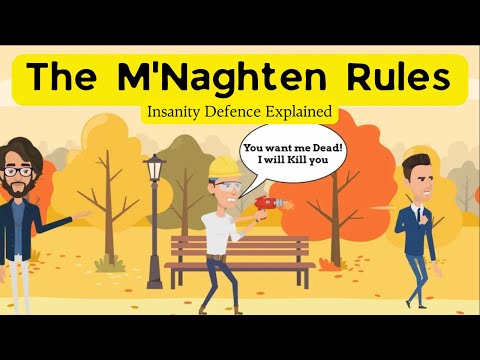
You know those moments in history that really shake things up? Well, back in the 19th century, a guy named Daniel M’Naghten had a bit of a meltdown. He thought he was on a mission to take out the Prime Minister. Spoiler alert: it didn’t go well for him.
Imagine being convinced you’re saving the world but ending up on trial instead. That’s where everything changed for how we think about mental illness and crime in the UK. This case flipped legal perspectives upside down and set the stage for how courts handle similar situations today.
The information on this site is provided for general informational and educational purposes only. It does not constitute legal advice and does not create a solicitor-client or barrister-client relationship. For specific legal guidance, you should consult with a qualified solicitor or barrister, or refer to official sources such as the UK Ministry of Justice. Use of this content is at your own risk. This website and its authors assume no responsibility or liability for any loss, damage, or consequences arising from the use or interpretation of the information provided, to the fullest extent permitted under UK law.
So, let’s dive into this wild story of M’Naghten, his infamous case, and why it’s still a big deal in our legal system. Seriously, it’s more interesting than it sounds!
Understanding the M’Naghten Rule: Definition and Key Insights
The M’Naghten Rule is a really important concept in UK law, especially when it comes to dealing with mental health issues in criminal cases. It basically sets out the criteria for someone to be considered legally insane. If you’re ever scratching your head about why a person wasn’t held fully responsible for a crime due to their mental state, well, this is likely what’s coming into play.
So, let’s break it down. The rule originated from a case back in 1843 involving a man named Daniel M’Naghten. He shot and killed the secretary of the then British Prime Minister, believing he was being persecuted. Yeah, it sounds like something straight out of a dramatic film! During the trial, evidence came up about his mental state, and this led to the development of what we now know as the M’Naghten Rule.
The core idea is that if someone does not understand the nature of their actions or cannot distinguish between right and wrong because of a severe mental disorder, they might be excused from criminal liability. It’s like saying, “Hey, if you genuinely didn’t know what you were doing was wrong because your brain was misfiring, then maybe we need to talk about how to handle that differently.”
Let’s dive into some key points of this rule:
- Understanding Your Actions: To apply the M’Naghten Rule, it’s crucial that a person can’t understand what they’re doing during the act due to their mental illness.
- Differentiating Right from Wrong: If they can’t tell right from wrong at that moment because of their condition, this plays into whether they’re found not guilty by reason of insanity.
- The Burden of Proof: It’s usually on the defence to prove insanity. This means lawyers have to bring in expert witnesses like psychiatrists who can testify about someone’s mental health at the time.
The significance? Well, it changed how courts viewed insanity pleas. Before M’Naghten, there wasn’t really a clear standard—cases were all over the place! Now there’s a structured way for courts to assess these situations.
This rule also sparked discussion about how those with mental illnesses are treated within our justice system. It raises moral and ethical questions: How do we balance justice for victims while also considering those who truly can’t help their condition?
Another interesting fact is that similar tests exist in other legal systems around the world but may differ slightly in approach and application based on cultural contexts.
To sum it up: The M’Naghten Rule is pivotal in understanding how legal systems deal with defendants who are mentally ill. It seeks that fine balance between accountability and compassion—because everyone deserves fair treatment under the law, don’t you think?
Understanding the M’Naghten Rule: Comprehensive Guide and PDF Resource
The M’Naghten Rule is a really important part of how we look at mental health in criminal law in the UK. Basically, this rule helps determine whether someone was sane or insane at the time they committed a crime. Let’s break it down.
Origin of the M’Naghten Rule
This rule comes from a case in 1843 involving a guy named Daniel M’Naghten. He killed Edward Drummond, thinking he was trying to kill the Prime Minister, Sir Robert Peel. Oh man, what a tragic misunderstanding! During his trial, it became clear that M’Naghten had serious mental health issues. The jury found him not guilty by reason of insanity, which led to the creation of this significant legal rule.
The Core of the Rule
The key point of the M’Naghten Rule is all about understanding someone’s mental state during a crime. It states that:
- If a person is unable to understand what they did was wrong due to a serious mental disorder, they may not be held criminally responsible.
- Also, if they cannot understand the nature of their actions—like actually knowing it was wrong—they can use this as part of their defense.
So basically, if someone isn’t mentally sound when they commit an act, they might be seen differently under the law.
Legal Significance
This rule holds weight in court decisions and has influenced many cases over time. For example:
- If someone commits an offense but can prove they were experiencing severe schizophrenia or another major condition that affected their reasoning abilities, it could lead to an acquittal based on insanity.
- This doesn’t mean they walk away free; often they’re sent to secure psychiatric hospitals instead.
That’s pretty crucial because it shows how seriously we take both public safety and mental health issues.
M’Naghten’s Limitations
However, there are some issues with how this rule is applied. Critics argue that it’s overly simplistic and can sometimes lead to unfair outcomes:
- Not everyone with a mental illness gets treated fairly; often there’s stigma attached that can affect jury opinions.
- Some people might fall through cracks because proving insanity is complicated and requires expert testimony.
So you see? It’s not just as easy as saying “I wasn’t well,” right? There’s a lot more involved.
Conclusion and Further Resources
To sum things up, understanding the M’Naghten Rule helps us grasp how law interacts with mental health in criminal cases. If you’re looking for more insights or deeper discussions on this topic, you might find PDFs or additional resources online beneficial! They dive into case studies and provide even more context around this fascinating area of legal history.
Understanding these nuances can really change how we see justice in cases where mental health plays a role. It’s worth exploring more if you’re curious about how laws evolve and adapt over time!
Understanding the M’Naghten Rules in UK Law: A Guide to Insanity Defense
The M’Naghten Rules are pretty crucial when it comes to understanding how the insanity defense works in the UK. So, let’s break it down.
First off, these rules come from a case back in 1843 involving a man named Daniel M’Naghten. He was charged with murdering Edward Drummond, thinking he was trying to kill the Prime Minister. M’Naghten was convinced that he was being persecuted due to some kind of delusion. This whole scenario ended up changing how we think about criminal responsibility and mental illness in legal terms.
The key takeaway from the M’Naghten case is that the law recognizes **insanity** as a valid defense under certain conditions. Basically, if someone is suffering from a severe mental illness, they may not be held responsible for their actions if they:
- Did not understand what they were doing at the time of the crime.
- Did not know what they were doing was wrong.
Doing something you don’t even realize is wrong? That’s where it gets interesting—like imagine being caught in a storm and having no idea you’re even in danger. It’s all about that lack of awareness.
Another aspect to consider is that this doesn’t mean someone walking into court with some sort of mental health label will automatically get off scot-free. No way! The courts take this seriously, and there are rigorous assessments involved. Experts usually step in to evaluate whether someone truly fits into this category or if they’re just putting on an act.
Also, if someone pleads not guilty by reason of insanity under these rules but ends up being found insane, they might not walk away completely free either. Instead, they can be sent to a secure hospital for treatment rather than prison time—sometimes for longer than they’d have spent in jail!
It can be easy to think about cases like this as black and white—either you did something wrong or you didn’t. But real life isn’t so simple. For instance, picture someone who has severe schizophrenia and believes that they’re on a mission from aliens when they commit an offense—this could potentially fall under the M’Naghten Rules.
In summary, the M’Naghten Rules help create a balance between justice and understanding mental health issues within criminal law. They recognize that people can commit acts without full awareness or control due to their mental conditions. And remember, it’s all about the proof: showing clear evidence that an individual’s mental state at the time led them down such a path can be quite complex!
So next time you hear about an insanity defense in court—or read about it online—you’ll have a better grasp of what those M’Naghten Rules really mean!
The M’Naghten case, which kicked off back in 1843, is pretty significant in the UK’s legal landscape. It revolves around a man named Daniel M’Naghten who, unfortunately, thought he was on a mission to kill the British Prime Minister at the time. He ended up shooting the wrong man and claimed he was suffering from paranoia—like he believed people were trying to get him.
So here’s the thing: during his trial, M’Naghten’s defense argued that he couldn’t tell right from wrong due to his mental illness. This idea sparked a massive conversation about how we treat defendants who are mentally ill. The jury found him not guilty by reason of insanity, and this totally changed how the legal system handles similar cases.
What’s interesting about this case is that it led to the formulation of what we now call the “M’Naghten Rules.” These rules set out a clear test for determining if someone can be held criminally responsible for their actions if they were mentally impaired. Essentially, it asks whether the person could understand what they were doing or know it was wrong.
You might think about all those crime dramas where they bring up insanity as a defense; well, this case laid down some important ground rules for that sort of thing in the UK. It’s also worth noting that attitudes towards mental health have evolved since then. People are more aware of mental health issues today, but back when M’Naghten’s story unfolded? Not so much.
Imagine being so consumed by your fears that you could lose touch with reality completely—it’s pretty heartbreaking. This case is like a turning point; it shines a light on how crucial it is to consider mental health in legal contexts. Of course, there are still debates today on this topic—like, does the system do enough to support individuals with mental illness?
So yeah, while The M’Naghten case was over 180 years ago, its ripples are still felt today in our courts and discussions around justice and mental health rights. It’s like we’re always learning from history—at least I hope we are!


