
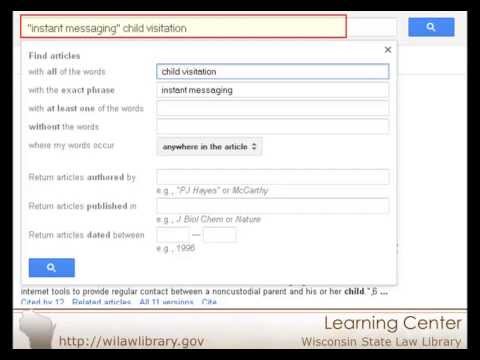
You know that moment when you’re knee-deep in research and can’t find anything useful? It’s like searching for a needle in a haystack, right? Well, picture this: you could actually have a whole library at your fingertips without ever stepping foot outside. Sounds dreamy, huh?
Google Scholar is one of those tools that can make your life easier when it comes to digging into UK case law. Seriously! It’s not just for academic papers. It’s like having a secret weapon for legal research.
The information on this site is provided for general informational and educational purposes only. It does not constitute legal advice and does not create a solicitor-client or barrister-client relationship. For specific legal guidance, you should consult with a qualified solicitor or barrister, or refer to official sources such as the UK Ministry of Justice. Use of this content is at your own risk. This website and its authors assume no responsibility or liability for any loss, damage, or consequences arising from the use or interpretation of the information provided, to the fullest extent permitted under UK law.
Imagine sitting on your couch in your PJs, sipping tea, and accessing court cases with just a few clicks. That’s the magic of Google Scholar. You get to uncover the stuff that could help you out tons without all the fuss.
So let’s chat about how to make Google Scholar your new best friend for finding UK case law. Ready to explore?
How to Properly Cite Case Law from Google Scholar: A Comprehensive Guide
So, you’re diving into case law research on Google Scholar? That’s great! It’s a powerful tool, and knowing how to cite correctly can make your life a lot easier later on. Let’s break down the whole process together.
First things first: **Google Scholar** is a fantastic resource for finding legal cases from the UK. You can search for court decisions, see who cited them, and even look at related articles. But when it comes to writing up your findings—citing those cases correctly is key. So, how do you do that?
1. Find Your Case
You start by entering the relevant keywords in the search bar. Maybe it’s the name of a party involved or a specific legal issue. For instance, if you type “R v Brown,” you’ll find all sorts of info about that landmark case.
2. Select the Right Citation
Once you’ve found your case, click on it to access more details. Look for a quotation mark icon; clicking that will show you different citation formats like APA or MLA. But wait! For legal documents, you’ll want to stick with legal citation formats used in your jurisdiction.
3. Format Your Citation
In UK law, the standard format usually includes:
– The case name (in italics)
– The year of the decision (in brackets)
– The volume number (if applicable)
– The report abbreviation
– The starting page number
Here’s an example:
R v Brown [1993] 2 WLR 556.
So in this example:
– R v Brown: This is your case name.
– [1993]: Indicates it was decided in 1993.
– 2 WLR: This tells you it was reported in Volume 2 of the Weekly Law Reports.
– 556: This is where you’ll find this case starting on page 556.
4. Include Court Details (If Necessary)
Sometimes it helps to include what court heard the case, especially if it’s not clear from the report title or if there are multiple reports of similar cases. For example:
C v L, [2020] EWHC 1865 (Fam).
Here, “EWHC” stands for “England and Wales High Court,” which gives readers specific context about where to locate it.
5. Check Citing Rules
Now here’s an important bit: Different institutions may have slightly different rules or formats they prefer when citing cases—like whether they want certain elements bolded or italicized differently—so don’t forget to check any guidelines given by your university or institution!
6. Double Check!
Always cross-check against other sources like textbooks or online guides just to be sure you’re doing it right!
A Quick Recap:
- Search effectively using keywords.
- Select the correct citation format from Google Scholar.
- Structure citation correctly using standard legal format.
- Add court details if necessary.
- Follow institution-specific guidelines.
- Double-check accuracy before submission.
You know, I remember struggling with citations back when I was studying law; I felt overwhelmed sometimes! It turns out that taking my time and focusing on these steps made everything much clearer and less stressful.
So there you go! You’re all set now; happy researching! Don’t let citations trip you up—they’re just little markers helping lead others (and maybe future-you) right back to those crucial decisions!
Evaluating Google Scholar for Legal Research: Pros, Cons, and Best Practices
Evaluating Google Scholar for Legal Research
When it comes to legal research, Google Scholar can be a handy tool, but it’s not without its quirks. So let’s break down the pros, cons, and some best practices for using Google Scholar in the UK legal landscape.
Pros of Google Scholar
First off, one of the biggest advantages of using Google Scholar is its free access. You don’t have to pay for subscriptions like you do with some legal databases. This makes it accessible for everyone, especially if you’re just starting out or on a budget.
Another great thing is that Google Scholar covers not just case law but also academic articles. If you’re exploring a specific legal topic, you can find scholarly works that might give you different perspectives.
Also worth mentioning is the user-friendly interface. It’s pretty straightforward to navigate. You type in what you’re looking for and voilà—results pop up! Plus, it has advanced search options that let you filter by date or relevance.
Cons of Google Scholar
On the flip side, though, there are some downsides. One major issue can be incomplete data. Not all cases from every court are included. So if you’re looking for something very specific from a lesser-known court ruling, you might come up dry.
Another point is that the search algorithms can sometimes be a bit clunky. You might notice irrelevant results popping up alongside what you want. That can waste your time as you sift through everything.
Lastly, when dealing with UK law specifically, keep in mind that Google Scholar primarily features US cases and documents. While it has some UK content, it’s definitely not as comprehensive as dedicated UK databases like Westlaw or LexisNexis.
Best Practices
So how do we make the most out of Google Scholar? Here are a few best practices:
In summary, while Google Scholar is an invaluable resource due to its accessibility and breadth of information—especially for students and those new to legal research—it’s important to combine it with other resources when serious research is on the line. This way you’ll get a fuller picture and avoid missing any crucial information along the way!
Mastering UK Case Law Research: A Comprehensive Guide to Effective Techniques and Resources
Researching case law in the UK can feel a bit daunting at first, but honestly, it doesn’t have to be. One handy tool that’s right at your fingertips is Google Scholar. Yep, you heard me right! It’s not just for finding research papers or random articles; it’s pretty useful for legal research too.
When you hop onto Google Scholar, you’ll notice a search bar—this is where the magic begins. You can start by typing in a case name or relevant keywords related to the legal issue you’re exploring. Just remember, being specific helps. If you’re looking for something like the R v Brown case about consent and bodily harm, type that in directly.
Now, here are some handy tips and tricks to make your research smoother:
- Use Quotation Marks: If you’re searching for an exact phrase, put it in quotation marks. For example, “duty of care” will yield results that contain those words together rather than scattered through different parts.
- Narrow Down Results: Use filters to narrow down your findings by year or type of document. It saves time and helps zero in on what matters.
- Citations Matter: When you find a relevant case, check out its citations. It can lead you to other important cases that are related and might give more context.
- Stay Updated: Follow areas of law that interest you on Google Scholar; they can notify you about new cases as they come out.
Oh! And don’t forget about the “Legal opinions and journals” option under “Case law.” This section includes judicial opinions directly from courts—super useful if you’re digging deeper into case analysis or critiques.
Let’s not overlook how important it is to know what resources are credible. While Google Scholar does filter results pretty well (they’re usually academic), always cross-reference with official sites like the UK Supreme Court or similar databases.
If you’ve ever been lost in the library frantically hunting through books, this can feel like a breath of fresh air—just think of how much easier online research makes everything! You’re not flipping through dense texts trying to locate a particular judgement anymore; it’s right there at your fingertips.
Remember though: while Google Scholar is great for basic searches and gaining an understanding of cases, diving into law reports or specialized legal databases will usually provide more comprehensive insights later on when you need them.
In short: mastering UK case law research using Google Scholar is all about knowing how to navigate it effectively. Being clear with your searches and using its features will save hours of frustration down the road! So go ahead and give it a whirl—you might just find yourself enjoying the process more than you expected!
You know, if you’ve ever found yourself sifting through heaps of legal texts and feeling a bit overwhelmed, you’re not alone! It can be a bit daunting, especially when you’re trying to dig up case law in the UK. But here’s where Google Scholar comes into play. It’s like having a library at your fingertips—quite literally.
Picture this: you’re in the middle of studying for an important exam or working on a legal project. You need to find relevant cases to back up your arguments. That’s when you think, “What if I could just type in what I’m looking for and—bam!—all the cases pop up?” Well, that’s what Google Scholar does for you.
Now, it might not be perfect, but it’s surprisingly handy. You can start by just typing in some keywords related to your case or question. For instance, let’s say you’re curious about negligence cases involving children. You’d type something like “negligence children UK” into Google Scholar. Almost instantly, you get access to a range of case law decisions and articles that are relevant.
And here’s where it gets really interesting. Google Scholar doesn’t just pull out UK cases; it also gives you access to academic articles that discuss these cases! This means you can not only look at what was decided but also understand the reasoning behind those decisions through scholarly analysis.
Of course, there are some things to keep in mind while using it. Sometimes the search results might throw up a few unrelated cases, so you have to sift through them a bit—it can feel like finding a needle in a haystack sometimes. But with practice and experience, you get better at it!
I remember helping a friend who was knee-deep in research for his human rights thesis last year. He was struggling with traditional databases and asked me about Google Scholar as a last resort. After spending an afternoon exploring together with coffee by our side (and maybe too many biscuits!), he ended up finding some key judgments that shaped his entire argument.
The beauty of tools like Google Scholar is that they democratize access to information. Whether you’re a law student or someone simply interested in understanding legal principles better, having resources available for free is pretty game-changing!
So if you’re looking into UK case law research and haven’t tried Google Scholar yet, I’d say give it a shot! It might just save you a lot of time—and who knows? You might stumble upon something unexpected that sparks new ideas or perspectives along your journey.


