
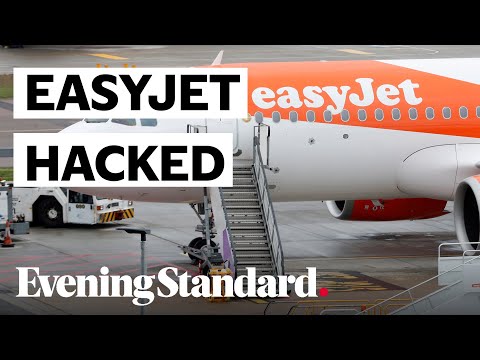
You know, data breaches are becoming the new normal, like forgetting your phone at home or running out of milk. Just recently, EasyJet had a pretty massive one.
Imagine booking your holiday, all excited to fly away, and then finding out that your personal details have been compromised. Ouch, right? This isn’t just about a few annoying emails. It’s serious stuff!
The information on this site is provided for general informational and educational purposes only. It does not constitute legal advice and does not create a solicitor-client or barrister-client relationship. For specific legal guidance, you should consult with a qualified solicitor or barrister, or refer to official sources such as the UK Ministry of Justice. Use of this content is at your own risk. This website and its authors assume no responsibility or liability for any loss, damage, or consequences arising from the use or interpretation of the information provided, to the fullest extent permitted under UK law.
The thing is, when companies mess up like this, it raises a lot of questions. What does it mean for you, the customer? Or even EasyJet as a business? And what kind of legal implications are hanging in the air like that cloud before a rainstorm?
Let’s just say it can get pretty complicated. So, if you’re flying with EasyJet or any other airline for that matter, you might want to stick around and hear more about what happened and why it matters to you.
Understanding the Consequences of the EasyJet Data Breach: Impacts on Customers and the Airline Industry
The EasyJet data breach, which came to light in 2020, serves as a crucial reminder of how important our personal data is. When hackers accessed the details of over 9 million customers, it raised serious questions about security and the responsibilities of companies handling sensitive information. So, what does this mean for you and the airline industry?
Impacts on Customers
Firstly, let’s talk about you as a customer. With your personal data exposed, there’s a risk of identity theft or fraud. Think about it: your passport details and email addresses are pretty precious stuff. You might receive phishing emails or even fraudulent bookings in your name. That can be really stressful!
Also, customers could face emotional distress knowing their info isn’t safe. It’s like leaving your front door unlocked and realizing later that someone walked right in. No one likes that feeling.
Legal Implications for EasyJet
Now, onto EasyJet’s side of things. Under UK law—specifically the Data Protection Act 2018—companies must protect personal information or face consequences. If they don’t comply with these rules, they could be slapped with hefty fines from the Information Commissioner’s Office (ICO).
With this breach being rather significant, EasyJet found itself under scrutiny not just from customers but also regulatory bodies. The company could potentially face a fine of up to £17 million if it is found negligent in how they protected customer data.
Duty of Care
You see, businesses have a duty of care. This means they are responsible for ensuring that your data is secure while they hold it. If you feel like they dropped the ball here, you might have grounds for a complaint or even legal action.
EasyJet is not alone; this incident has wider implications across the airline industry too. Companies now need to seriously rethink their cybersecurity measures to avoid similar breaches.
The Bigger Picture
Beyond just EasyJet and its customers, this whole situation raises questions about trust in the aviation industry itself. If people feel their personal information isn’t safe while booking flights, well… they might think twice before hitting “buy now,” right?
Airlines may lose business if customers decide to fly with competitors who appear to take data security more seriously. It’s essential for companies in this sector to boost their cybersecurity practices not only because it’s good practice but also because it affects their bottom line!
In summary, while we may love traveling with airlines like EasyJet for convenience and price, we must be aware of our rights when it comes to our personal data being mishandled or exposed due to breaches like this one. Hopefully, lessons learned from such incidents will lead to better protection mechanisms in place moving forward!
Consequences of Data Protection Breaches in the UK: Laws, Penalties, and Best Practices
Data protection breaches are no laughing matter, especially in the UK. With laws in place to protect your personal information, when companies mess up, the consequences can be serious. Let’s break it down a bit.
First off, we’ve got the **UK General Data Protection Regulation (UK GDPR)**. This law covers how your data should be handled and sets out clear rules for organizations. If a company fails to protect your data properly, they may face some hefty penalties.
Now let’s talk about those penalties. The Information Commissioner’s Office (ICO) is the body that enforces data protection laws in the UK. When there’s a breach like the one EasyJet faced in 2020—where details of nearly 9 million customers were compromised—the ICO steps in. They can impose multi-million pound fines for serious infringements. For instance, fines can reach up to **£17.5 million** or **4% of annual global turnover**, whichever is higher.
But it’s not just about money; there are other consequences too:
- Reputation Damage: A company that fails to protect its customers’ data risks losing their trust.
- Legal Action: Individuals affected by data breaches may decide to take legal action against the company.
- Injunctions: The ICO can issue injunctions requiring businesses to stop processing certain types of personal data until they sort things out.
So you see, if a business screws up and lets your info slip out, it can lead to some pretty serious issues for them.
Looking at best practices is crucial too. Companies need to take strong steps to safeguard your data, like:
- Regular Training: Employees should know how to handle personal information securely.
- Data Minimization: Only collect what you need—less is more!
- Patching Vulnerabilities: Keeping software updated helps prevent breaches.
The EasyJet case is a prime example of what can go wrong when these practices aren’t followed closely enough. The airline didn’t just face financial repercussions; they also had to deal with customer anger and potential lawsuits from those impacted.
In short, if you’re handling personal data in the UK—and who isn’t?—you need to make sure you’re on top of your legal obligations under the UK GDPR. It’s about keeping people’s information safe and sound so that breaches like EasyJet’s don’t happen again!
Understanding the Penalties for Data Breaches in the UK: A Comprehensive Guide
Understanding the Penalties for Data Breaches in the UK
So, data breaches, huh? They’re a big deal nowadays, especially when you think about how much of our personal info is floating around online. The EasyJet data breach that popped up recently really highlighted this issue. Let’s break down what penalties can arise from such situations, particularly in the UK.
When it comes to data breaches, the General Data Protection Regulation (GDPR) plays a huge role in setting the rules. Companies that mess up and fail to protect your data could face serious consequences.
Financial Penalties
One of the first things that probably comes to mind are fines. Under GDPR, the maximum fine can be hefty—up to £17.5 million or 4% of a company’s annual global turnover—whichever’s higher! This means if a company like EasyJet failed to safeguard your details properly, they could find themselves staring at an eye-watering bill.
But here’s where it gets interesting; it’s not just about getting slapped with a fine for not having proper security measures in place. The Information Commissioner’s Office (ICO), which is in charge of enforcing these rules in the UK, looks at several factors before imposing penalties.
- Severity and Duration: How serious was the breach and how long did it go on?
- Nature of Personal Data: What kind of information was compromised? Was it sensitive stuff?
- Intentional or Negligent: Was this all just an accident or did they knowingly cut corners?
- Crisis Management: Did they act swiftly to fix things once they realized what had happened?
These factors can lower or raise penalties significantly!
Civil Liability
Then there’s civil liability. If your data gets leaked and you suffer damages because of it, you might have grounds to sue for compensation. It’s like getting hit by a bus; if someone else didn’t take care while driving, you could claim damages from them for your injuries.
With EasyJet’s situation, imagine if some passengers’ bank details were exposed and then used fraudulently. They could potentially go after EasyJet for failing to keep their information secure.
Court Action
And then there’s court action! In some cases, affected individuals or groups might decide they want justice served through the courts rather than going through ICO channels alone. You know how lawsuits can be? Well, they can get complicated real quick!
If you think about it; fear of being dragged into court adds another layer on top of reputational damage that companies like EasyJet face when breaches occur.
The Reputational Risk
Beyond just financial penalties and legal action, let’s not forget about reputation—this is huge! Once a company is associated with a dat breach, people may second-guess using their services again. Who wants to fly with someone who couldn’t keep their personal info safe?
To wrap this up: Understanding penalties related to data breaches involves quite a bit more than just those big fines everyone talks about! There are so many angles—financial liability, civil claims by affected individuals, potential court actions—it all mixes together into ultimately making companies think twice about how well they protect our personal information.
So next time someone brings up that EasyJet data breach—or any other one—you’ll have some solid knowledge on what those penalties really mean!
When thinking about the EasyJet data breach, which happened a while back, it kind of hits you, doesn’t it? All those personal details of customers exposed—it’s unsettling. You know, it’s like when you leave your door unlocked and a gust of wind just throws it wide open. Suddenly, your private space feels invaded.
So, let’s talk about the legal implications. In the UK, there are strict laws regarding data protection, mainly driven by the General Data Protection Regulation (GDPR). I mean, these rules are there to keep our personal information safe and secure. If a company like EasyJet mishandles that info—whether it’s credit card details or personal addresses—they can end up in hot water with hefty fines.
And can you imagine being one of those customers? You book a holiday feeling excited, and then poof! Your data is compromised. There might be anxiety about identity theft or just that nagging worry that someone could misuse your information. It puts consumers in such a vulnerable position.
From a legal perspective, people affected by this breach could claim compensation for distress caused by this situation under GDPR laws. The thing is, proving that distress isn’t as straightforward as it sounds. It’s not just about saying “I felt bad”; it’s about showing how this breach has impacted your life directly.
Moreover, organizations like the Information Commissioner’s Office (ICO) would step in and investigate if EasyJet took adequate measures to protect customer data from being leaked in the first place. If they find lapses or negligence in their security practices? Well, that’s when penalties could get really severe.
But here’s the twist: businesses also need to balance their investment in technology with the need to keep our personal information private and secure. Sometimes shortcuts are taken in the name of cost-cutting… And we end up on the losing side of that bargain.
Honestly though, incidents like this make us all rethink how we share our information online. It’s vital for companies to be transparent and accountable—as much for their sake as for ours—because trust is what keeps us coming back as customers.
So yeah, while EasyJet may be trying to recover from this incident and refine its policies moving forward, for everyday folks like you and me? We need to stay vigilant about our data because it’s in our best interest to protect what’s ours!


